Marble countertop does not simply mean a surface, it means a statement. Marble with its beautiful natural veining and smooth silky finish is an undisputed source of luxury and eternal style to a kitchen or a bathroom. However, this is the twist; marble is fragile and porous so that a single misstep can result in stubborn spots, dull etching or even permanent harm.
How then can you build maintain your marble to be as flawless and radiant as ever without causing damage? In case you ever wondered how to deep clean marble countertops right, you are in the right place. Here in this ultimate guide, you will find easy but effective everyday maintenance advice, the secrets of dealing with even the most stubborn stains and even clever ways of protecting your investment so that your marble continues to shine for years to come. And now are you willing to open the secrets? So off we go.
Why Proper Marble Cleaning Matters
Marble is a natural stone that is created by heat and pressure on limestone and hence is porous and easily reacts to acidic liquids such as lemon juice, vinegar, or wine. When improperly cleaned, you may etch (dull spots or a damaged surface), stain or even permanently discolor.
Here’s why proper marble cleaning is so important:
- Stain-resistant: Marble is also quite absorbent and any liquid left unattended will seep into the material and give it a stubborn stain.
- Avoid etching: Harsh or acid cleaners will consume the polished surface of the marble.
- Maintains shine: A little cleaning can make marble appear and be bright.
- Extends lifespan: Good care ensures that there is no damage and expensive repairs or replacements.
Daily Care for Marble Countertops
To maintain your marble countertops in perfect condition, you need to have simple daily practices. Regular and gentle treatment does not only preserve their natural beauty, but also avoids harm that may accumulate. The following are what you must do daily:
Wipe Spills Immediately
Marble is very porous and liquids can easily get absorbed resulting in tenacious stains. And never forget to semi-blot a spill as soon as you see it with a soft cloth or paper towel especially liquids like coffee, wine or citrus juice that are acidic and may etch and leave a stain.
Use a Damp Microfiber Cloth
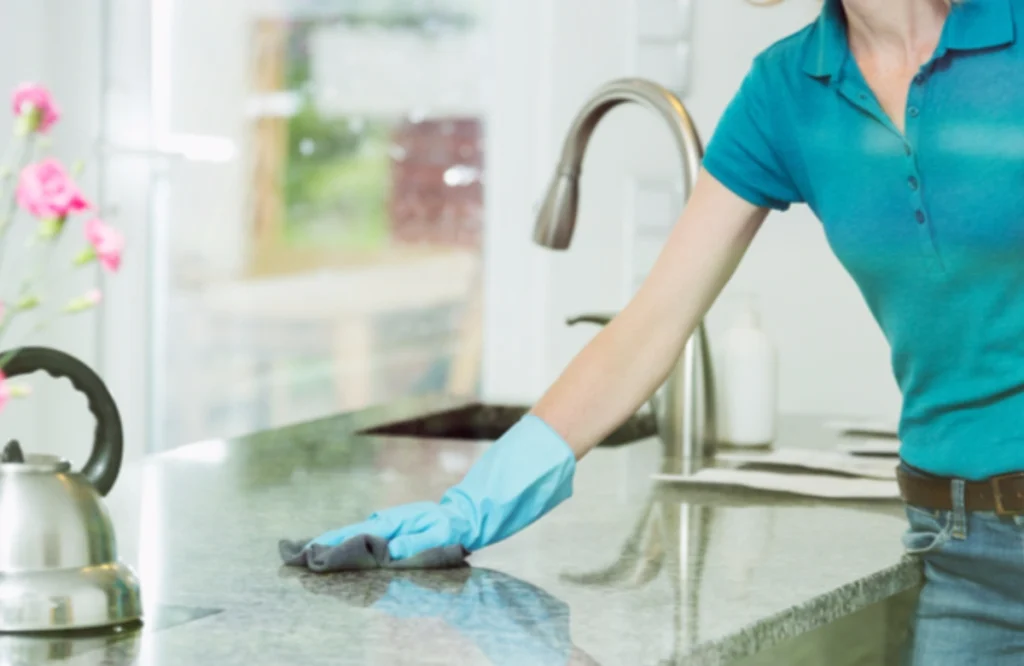
In the daily cleansing, all one has to do is wet a microfiber cloth in warm water and run it over the countertop. Such a technique cleans service the dust and minor dirt without any risk of scratching or dulling the polished surface of the marble.
Avoid Abrasive Sponges or Scrubbers
Marble can easily be spoiled by any rough or abrasive cleaning instrument that scratches the material. Wipe your countertops with soft microfiber cloths, or non-abrasive sponges to keep them safe and shiny.
Dust Regularly
Even the dust that falls finely even has the propensity to settle and create a dull film on your marble. Wipe your countertops lightly every day with a soft cloth to keep your space fresh and they will have a glow to them.
How to Clean Marble Countertops (Step-by-Step)
In case your marble countertops require a more thorough cleaning than a daily wipe, you should adhere to the following Commercial cleaning routine, which is quite soft and yet efficient. The sensitive nature of marble implies that you do not want to use hard chemicals or any abrasive scrubbing. This is a detailed step by step procedure of ensuring that your marble stays clean and safe:
Step 1: Gather Your Supplies
Before you begin, set aside everything you need to clean: a gentle or a mild dish soap, or a cleaner designed to clean marble, warm water, soft microfiber cloths or sponges, spray bottle, and a soft dry towel to dry with. Being prepared makes it all flow and efficient.
Step 2: Prepare a Gentle Cleaning Solution
Put in a bucket or spray bottle of warm water a few drops of mild dish detergent. Be sure not to use an acidic cleaning solution, such as vinegar or lemon juice, or an abrasive chemical cleaner, which will destroy or scuff the surface of the marble.
Step 3: Clear the Countertop Surface
Clean the counter top of all the objects, crumbs or clutter. This avoids scratching and you are able to clean the whole surface.
Step 4: Apply the Cleaning Solution
Wash your microfiber cloth/sponges with the soapy water. Blot out excess moisture, don’t blot too much so that it drips. By going round the counter top in a circular motion, clean it using a moist cloth to eliminate the dirt and grime. Give special priority to those regions that are prone to be dirtier such as near sinks, edges of stoves.
Step 5: Tackle Stubborn Spots Gently
Any sticky or greasy areas should have a little bit more pressure put on them with your cloth or sponge, but never scrub at them. With more stubborn grime, you may leave a soapy solution on the spot for a few minutes and then wipe it off.
Step 6: Rinse Off Soap Residue
Soap residue may give streaks or dull the shine of your marble, so use a clean microfiber cloth moistened with plain water and wipe down the full counter top. It is done so that no cleaning solution is left.
Step 7: Dry Thoroughly
Take a dry towel and rub the counter top to get it dry. This will avoid the formation of water spots, mineral deposits and streaks that make your marble look polished.
Step 8: Optional Polish Your Marble
You can apply a marble safe polish or some drops of mineral oil with a clean soft cloth to get an extra shine. Rub your surface circularly by buffing. This is a measure to provide marble with the natural shine and a protecting layer.
Step 9: Clean Up Your Tools
Wash clothes and sponges and dry them up. To ensure your marble is always spotless, do not use any cloth that is loaded with residues next time.
How to Clean Stained Marble
Marble stain can be frustrating, however given the correct technique, a lot can be cleaned off without damaging your countertop.
Common Types of Marble Stains:
- Organic stains: Coffee, tea, fruit or wine- typically brown or yellow.
- Oil based stains: Body fats or body mass.
- Rust stains: As a result of metals lying on the surface.
- Etch marks: This takes place in case of acidic substances.
Step-by-Step Stain Removal:
Determine the type of stain:
Understanding the cause of the stain guides in the selection of the most effective way to treat it.
Make a poultice:
- Combine baking soda with a little water and make a thick paste (in the case of oil stains).
- With organic stains, combine a little ammonia with hydrogen peroxide
Apply the poultice:
Use the paste to cover the stain highly with a 1/4 inch thickness.
- Put plastic wrap and tape down the edges.
- Dry it (24- 48 hours).
Remove and rinse:
- Gently remove off the dried poultice with a plastic spatula.
- Dampen a rug with clean water and remove the debris.
Preventive measure
Treatment will never be compared with prevention particularly in case of marble. Lastly, to protect your counter tops, take the following tips:
Marble seal it: A high-quality marble sealer once or twice a year keeps away stains and wear and damage.
Keep cutting boards: Marks and scratches on the marble will come about by direct cutting as well as knife marks.
Avoid acidic cleaners: Do not use vinegar, lemon juice or strong chemical cleaning agents.
Blot spills instantly: Never wipe spills, blot them so that liquid is not distributed.
Limit heavy objects::Do not groove or crack the marble by dropping and placing heavy ones.

How to Protect and Maintain Marble
In order to maintain your countertops in marble to a state of beauty over many years it is necessary to take proper care and maintain them:
Reseal Regularly
Because marble is porous, it is important that it be resealed after 6 to 12 months to be shielded against any stain or breakages. Re-sealing forms a shield and will ensure that your countertops are relatively free of spills and wear.
Use Soft Cloths for Cleaning
Wipe marble with soft microfiber cloths only in order to prevent scratches. Use scrubbers that are not abrasive, or other harsh products that tend to wear down the surface.
Polish Occasionally
Cleaning your marble every now and then by using a product that won t destroy your marble, makes your marble shiny once again and prevents small scratches and dullness.
Hire Professionals When Needed
To clean your marble safely and to remove deep stains, scratches or repair serious damage, professional restoration is the safe way to restore the original beauty of your marble.
Conclusion
Marble one that gives a house the kind of elegance that only a timeless beauty can provide and marble countertops are no exception and they require appropriate care to maintain the same beautiful appearance. Frequent light cleaning, rushing wet spills and regular sealing will ensure that your marble will be bright and safe. In order to remove tough stains or destruction, the most secure option is professional assistance. When properly taken care of, you will be able to have your marble counter tops as a showstopper years later.
Ready to give your home or office a fresh, spotless look? Contact Deep Cleaning today and experience the difference! Call us now to schedule your deep cleaning appointment!
FAQ’s
No. Vinegar and lemon juice are acidic and they can dull or etch marble surfaces.
Typically reseal every 6 to 12 months as recommended by usage and the products.
Find the type of stain and clean it utilizing an appropriate poultice or cleaner. Chronic stainage can be assisted with a specialist.
Cleaners to minimize are those that contain bleach, ammonia or acid. Rather, use pH-neutral cleaners or low potent soap.
Use cutting boards, prevent the use of any heavy objects and use soft cloths alone.